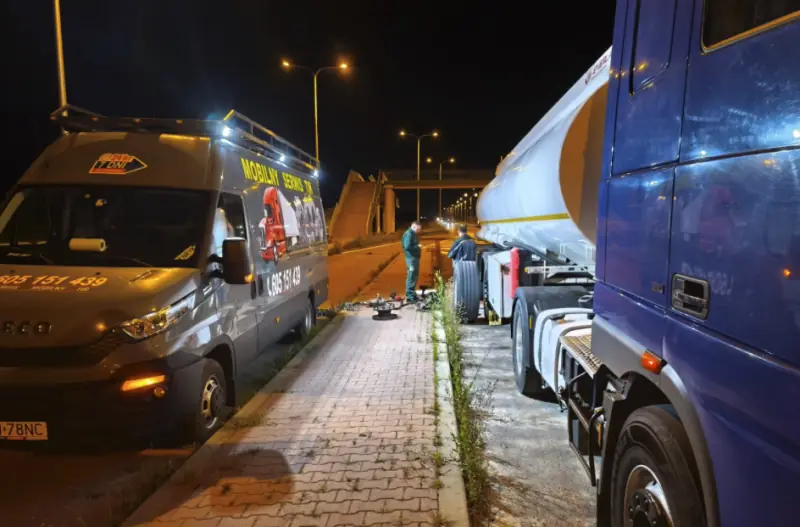
DAF – On-the-Spot Replacement of a Power Steering Hydraulic Hose
The DAF driver reported a sudden loss of power steering and a fluid leak. The symptoms were typical: the driver pulled over safely onto the hard shoulder / into a lay-by, marked the spot and…
Przemysław Milner··2 min read
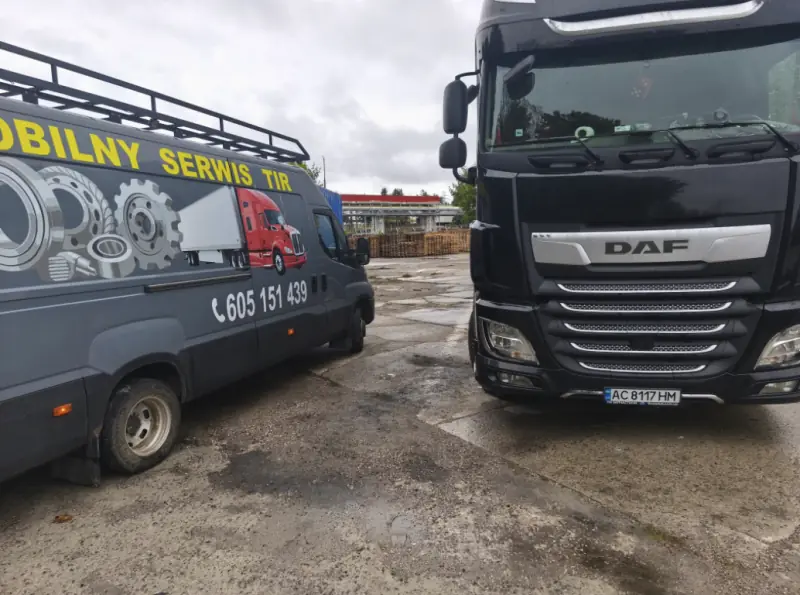
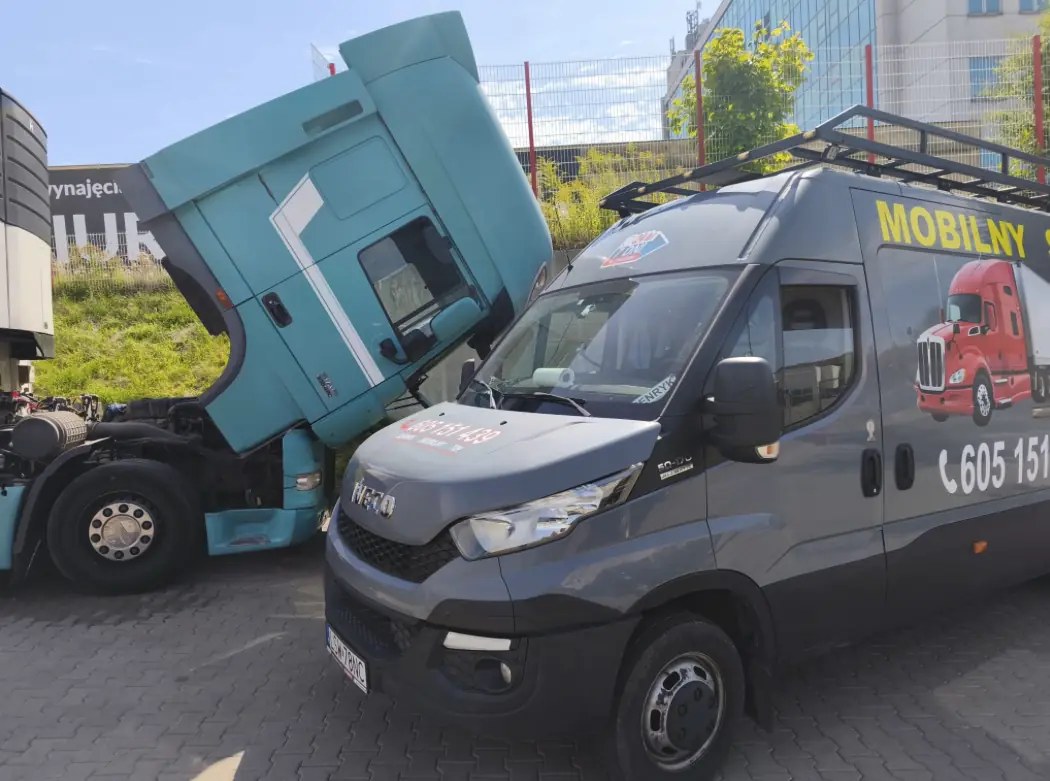
Today’s case: a call from a driver – a DAF with no power steering
The DAF driver reported a sudden loss of power steering and a fluid leak. The symptoms were typical:
heavy steering (especially at low speed),
traces of oil under the vehicle,
sometimes a whining pump or air bubbles in the reservoir.
The driver pulled over safely onto the hard shoulder / into a lay-by, marked the spot and got in touch with us. Thanks to this, the pump did not overheat or seize.
Why you must not keep driving with a damaged hose
Risk of damaging the power steering pump (no lubrication → costly repair).
Loss of control when manoeuvring in tight car parks or on slip roads.
Fire risk – power steering fluid on hot components.
Conclusion: stop safely, switch off the engine, mark the vehicle and call a mobile service.
On-site diagnostics
Our technician checked:
The source of the leak – high-pressure or return hose.
The condition of fittings/clamps and the hose routing (whether it rubs against the chassis or other components).
The fluid level in the reservoir (colour, smell, contamination).
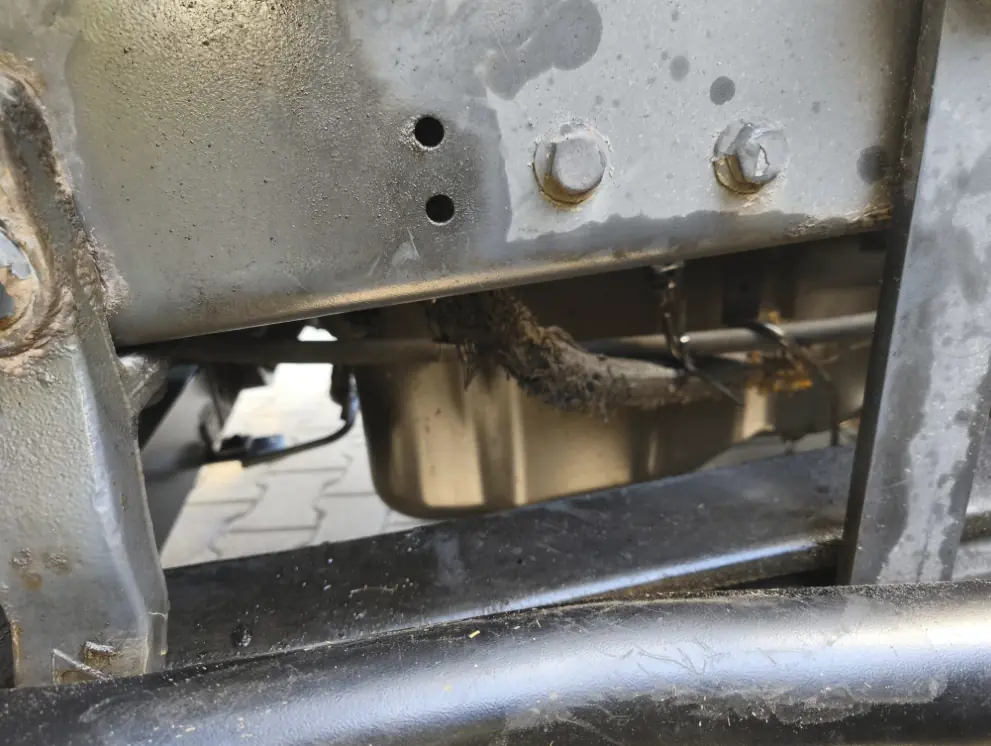
In this case the hydraulic hose of the power steering system had cracked – it had to be replaced.
Replacing the hose on the spot – step by step
Removing the damaged hose and securing the work area.
Making up/crimping a new hose with the correct working pressure and diameter (to DAF specification).
Fitting with correct routing (no tension, with allowance for vibration).
Topping up the fluid and checking for leaks.
Bleeding the system – slow lock-to-lock turns of the steering wheel with the engine running, checking the level.
Road test and a final check of the connections.
Result: the vehicle was back on the road without towing or further downtime.
The most common causes of power steering hose failure in trucks
Ageing rubber and micro-cracks caused by heat and vibration.
Mechanical damage (chafing, stone impacts).
Poor hose routing or worn brackets/clamps.
Contamination in the system (sludge, metal filings) that accelerates wear.
Prevention: how to extend the life of the system
Check the hoses at every service (cracks, crazing, chafing).
Replace worn clamps and rubber bump stops along the hose routing.
Use the right fluid and top up/replace it as recommended.
React to the first symptoms (leaks, a whining pump, foaming fluid).
Keep records of roadside repairs – it makes any future incidents quicker to diagnose.